People
El Ojo Salvaje is a transdisciplinary project bringing together filmmakers, historians, indigenous community members, and researchers across Chile, Argentina, Germany, and Japan.
Sebastián Escalona
Direction, artistic lead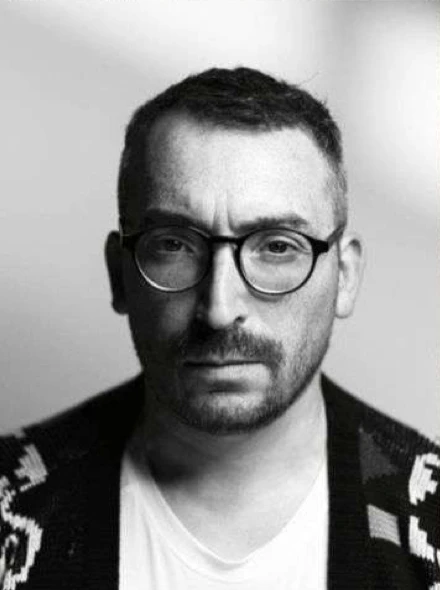
Sebastián Escalona is a visual artist, painter, set designer, and researcher. He studied Fine Arts at the Universidad de Chile. In his artistic practice, he combines the visual arts with contemporary forms of expression and discourse. At the centre of his current work is the investigation of images as autonomous and intelligent systems – structures that store memory, generate meaning, and develop an internal logic that transforms them from mere representations into forms of resistance.
His works have been shown in international contexts, including at the Watermill Center in New York, where he worked at the invitation of Robert Wilson and Marina Abramović. His research on the connection between the Selk'nam and the Bauhaus avant-garde has been presented in Weimar, Dessau and Berlin, and is part of the publication Bauhaus 100 años by the Centro Cultural La Moneda.
He is the director of the film project El Ojo Salvaje, which reactivates Martin Gusinde's expeditions in Tierra del Fuego through the reconstruction of Gusinde's plate camera. The resulting images are part of the permanent collection of the Museo Martín Gusinde in Puerto Williams.
In 2025, he was invited to represent Chile at the World Exposition Expo 2025 in Osaka, Japan, supported by the Chilean Ministry of Foreign Affairs.
In parallel, he is developing his work in Europe within the framework of IN SITU, the European network for the promotion of artistic work in public space.
In 2026, he was invited to present his work at Sophia University in Tokyo. In this context, he gained access to previously unexplored archives, including private collections of letters and documents from early missionaries.
Miguel Pantoja
Protagonist, narrator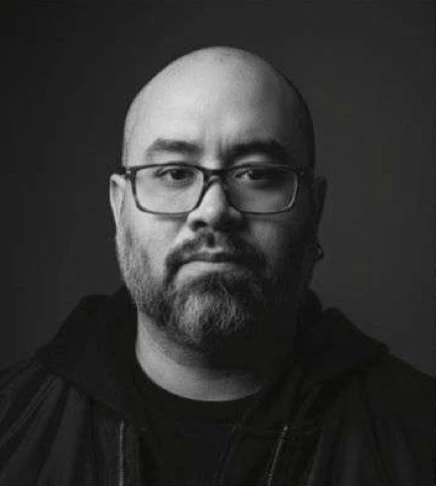
Miguel Pantoja is an educator and historian, as well as a descendant and leading representative of the Selk'nam communities (Onas) of Tierra del Fuego. His work is dedicated to the memory, history, and cultural continuity of the Selk'nam. His focus lies on the massacres of colonial violence – such as those at Cabo Peñas – and on the indigenous resistance that has enabled the Selk'nam's survival into the present. His voice is central to the discourse around the reclamation, recognition, and revitalisation of the Selk'nam cosmovision.
Miguel is a leading member of the organisation Rafaela Ichton. He currently heads the committee for the restitution of human remains, through which he is advancing the repatriation of five Selk'nam skeletons and associated spiritual objects of the spirit Sekriot within his community. These remain in museum institutions to this day.
As an educator and researcher, Miguel actively participates in cultural events, academic conferences, and spaces for reflection – such as Fuego en Presente. In doing so, he brings visibility to current issues facing indigenous communities and strengthens processes of intergenerational transmission of the Selk'nam cosmovision.
In El Ojo Salvaje, Miguel Pantoja acts as the protagonist narrator. His experience, body, and memory form the content of the project. Images, archives, and landscape are thus narrated from a situated, active voice. In recent months, Miguel has begun independently documenting his journey, turning image and sound into tools of active resistance.
He has also contributed previously unpublished audio material – the result of years of persistent research – including historical archives by Anne Chapman, field recordings, and translation studies of Selk'nam voices into Spanish.
Hema'ny Molina
Selk'nam voice, cultural work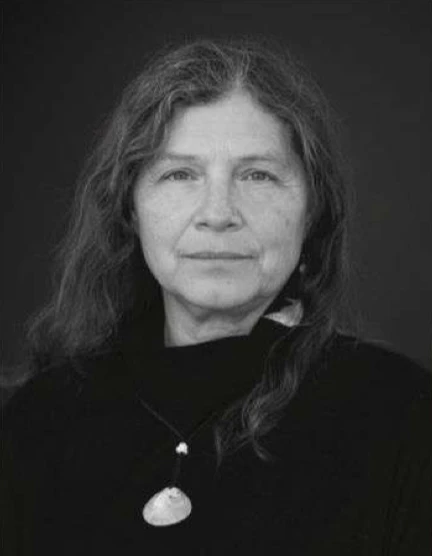
Hema'ny Molina Vargas is a Selk'nam writer, artisan, member of the Corporación Selk'nam Chile, and founder of the Hach Saye Foundation based in Tierra del Fuego. Her work is dedicated to the preservation, transmission, and revitalisation of the cultural memory of her community.
Within the Selk'nam communities, she has held a central political and cultural leadership role over many years. She led the process of demanding official recognition from the Chilean state – a historic and, to this day, unfulfilled aspiration. Her work strengthens the public visibility, collective identity, and forms of symbolic restitution of the Selk'nam in the present.
Hema'ny Molina has been an essential part of the El Ojo Salvaje project from the very beginning. She accompanied the expeditions through the Fuegian territory and brought a situated perspective that connects territory, memory, and contemporary artistic practice. Her involvement was decisive in establishing the novel links between Selk'nam culture and the Bauhaus movement.
Her work unites writing, craft, and cultural action as inseparable practices of resistance, continuity, and the future projection of Selk'nam memory.
Federico Alvarado
Screenplay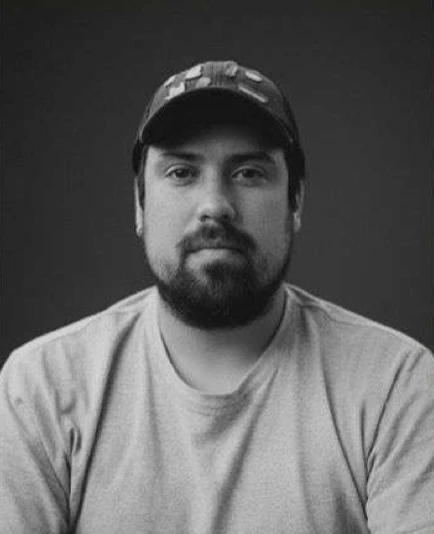
Federico Alvarado was born in Santa Fe, Argentina. He is a screenwriter and director who trained at the ENERC in Buenos Aires. His work engages with questions of identity and memory, as well as the tension between the intimate and the political. Together with Lucía Garibaldi, he wrote the feature film project Un futuro brillante (2025), which celebrated its world premiere at the Tribeca Festival 2025, where it received the Viewpoints Award. He was also part of the writing team for the series El método; principio de identidad (2023), produced by UN3TV, TEC TV, and the INCAA, which was screened at numerous international film festivals.
Together with Martín Heredia Troncoso, he wrote the screenplay for the feature film Bajo la corteza (2022), which was selected by the Ibermedia programme of the Fundación Carolina for the development of Ibero-American audiovisual projects and was released in cinemas in 2022. He is also the author and director of the short film Ausencia (2014).
Federico Alvarado is currently developing his debut feature film Caja de resonancia, which was selected for the screenwriting programmes LAB GUION 2023 in Colombia and Santiago Lab 2023 at Chile's international film festival SANFIC. In 2025, the project also received the Accésit Prize of the DAMA Screenwriting Award Lola Salvador in Spain.
In the documentary field, Federico Alvarado serves as screenwriter of El Ojo Salvaje, overseeing the narrative structure and conceptual clarity of the project. His work brings together historical research, cultural memory, and cinematic aesthetics.
Pedro López
Camera, DOP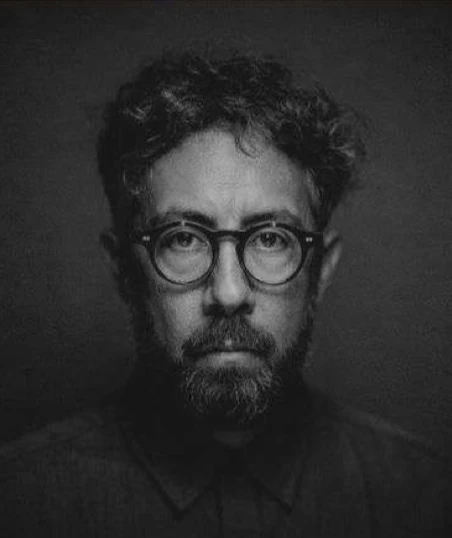
Pedro López is a cinematographer, Director of Photography, and photographer from Punta Arenas (Magallanes, Chile). He works on the cultural and territorial heritage of Patagonian Tierra del Fuego, whose landscapes and climate are among the most rugged in the world.
As a native of Punta Arenas, he has a particular connection to the indigenous peoples of Tierra del Fuego as well as to the history of the region and its transformation. In film and photography, he develops a visual language that is both sensitive and precise, in which the landscape itself becomes a narrative and symbolic space. He has worked, among others, with filmmaker Theo Court and photographer Jorge Brantmayer. He is currently a permanent Artist in Residence at the Festival Cielos del Infinito.
Mara Rodekohr
Historical research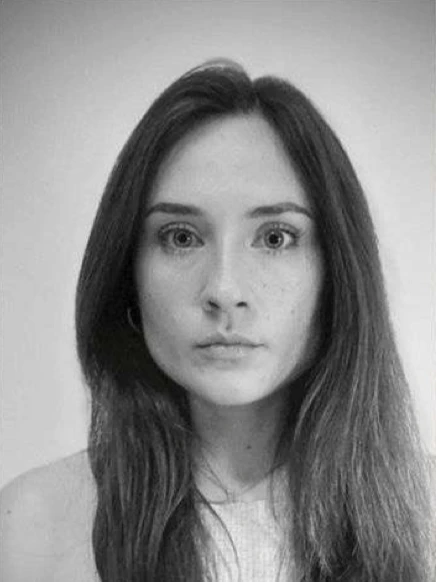
Mara Rodekohr is a historian and early-career researcher, trained at the Humboldt University of Berlin. Since 2025, she has been pursuing her doctorate in History at the University of Bielefeld under the supervision of Olaf Kaltmeier and Elisa Loncón Antileo (Universidad de Santiago de Chile). Her research focuses on the cultural evolution of the Mapuche conceptual horizon Küme Felen (“good life”) and examines its transformation between cosmology and colonial power structures in the 19th and 20th centuries. Her doctoral project brings together approaches from Decolonial Studies, indigenous anthropologies, historical time research, and linguistic ethnography.